By Ashland Craig, Editor in Chief
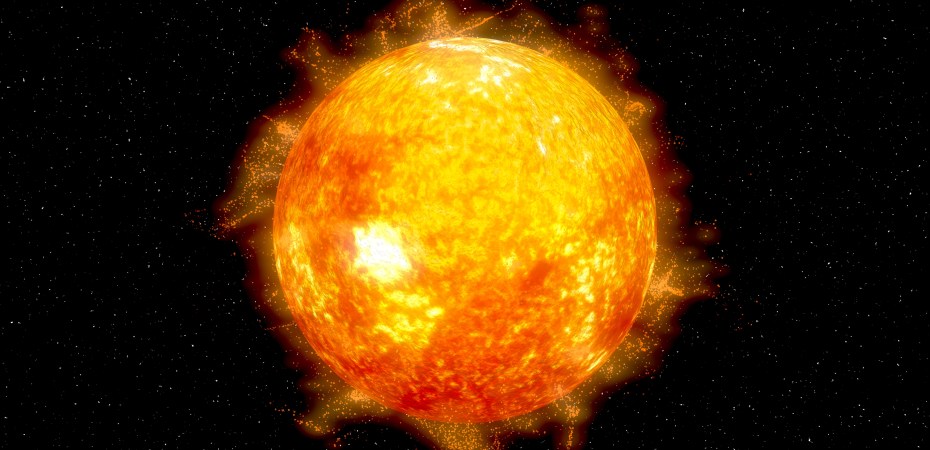
One hundred and twenty-six million degrees Fahrenheit―five times hotter than the Sun—is the temperature at which China’s Experimental Advanced Superconducting Tokamak (EAST) was able to achieve and sustain fusion reactions for seventeen minutes (Benson 2022). But what does this mean for us, and why should we care? Around the world, the issue of energy production has been constantly debated. For years, a long-term solution (that wouldn’t leave a heavy carbon footprint on the environment) wasn’t foreseeable. But recent technological developments have offered a different answer―that the future of commercial energy lies in the same source that gives us life on Earth: the Sun. In the Sun’s center, extremely high temperatures and strong gravitational forces provide the perfect conditions for hydrogen atoms to fuse together to create helium, resulting in a surge of energy (“Nuclear Fusion Power” 2022). This process is known as nuclear fusion. Once this development is harnessed by science, it will change the energy industry and the world forever.
While the extremely high-pressure, high-temperature core of the Sun is perfect for this type of energy production, Earth’s conditions aren’t exactly ideal for it. The world’s highest recorded surface temperature is 134 degrees Fahrenheit, or 56.7 degrees Celsius (El Fadli 2013). This is quite far from the temperature of the core of the Sun, which stands at a whopping 27 million degrees Fahrenheit, or 15 million degrees Celsius. Compared to the fiery inferno that is the Sun, Earth is like an ice cube. These numbers are almost impossible to fully comprehend―so much so that many dismiss them as impossible to achieve. So, how can we even begin to replicate this powerhouse that heats our entire solar system on a planet less than a millionth of its size? Though we know that commercial use of fusion energy is years, potentially even decades away, the advancements that have already been made might surprise you.
On August 8, 2021, the National Ignition Facility (NIF) of Lawrence Livermore National Laboratory (LLNL) performed a record-breaking fusion experiment that had promising results. For a fraction of a second, NIF was able to generate enough energy that it actually created more than was put in (Bishop 2021). This was achieved using a laser the size of three football fields, focusing its light onto a target the mere size of a BB. The results were record-breaking―LLNL reported an “8X improvement over experiments conducted in spring 2021 and a 25X increase over NIF’s 2018 record yield” (Bishop 2021). Since this experiment, the industry has only continued to progress further. Recently, on February 15, 2023, the Greifswald nuclear fusion experiment was able to achieve a shocking yield―1.3 billion joules of energy (Fleschner 2023). An output one thousand times higher than Lawrence Livermore’s NIF, occurring less than two years later.
But why haven’t we put this same amount of effort into evolving our current energy systems if obtaining nuclear fusion is so difficult? In many countries, including the United States, most of our energy sources are non-renewable, meaning that their supply is limited (“What is energy?”). Unlike its more environmentally sound counterparts, such as solar, wind, and hydropower, non-renewable energy is what leaves the biggest carbon footprint on the Earth. However, while renewable energy has seemed promising in many ways, it still only accounts for 12.4% of energy consumption in the US (“What is energy?”). In order for renewable energy to be nearly as effective as nuclear energy is projected to be, we would need to scale up massively.
As exciting as these developments are, some feel that fusion energy brings with it more risks than it does benefits. One of the biggest fears associated with the prospect of fusion energy is nuclear waste and radiation. While disasters like Chernobyl and Fukushima ring clear in the minds of many when we think about nuclear energy, there’s a common misconception among these worries. While power plants and radioactive material are often most associated with nuclear energy, these are most common in nuclear fission, a different type of nuclear energy. This is not the same as nuclear fusion, despite their similar names. News organization CGTN reports that with fusion, “It is absolutely impossible for a Fukushima-type accident to happen… The reaction relies on a continuous input of fuel; if there is any perturbation in this process, the reaction ceases immediately” (qtd. Parkinson 2022). Even so, like any form of energy production, nuclear fusion has other issues that need to be taken into consideration―like the fact that it may not be accessible for decades to come, or even at all. In 1976, the US Energy Research and Development Administration made a prediction stating that, provided the proper funding, fusion energy could be reached by 1990 (Galchen 2021). Even now, in 2023, commercial fusion seems impossible. The catch? The report predicted that the goal would only be achieved with an approximate value of nine billion dollars a year in today’s currency―but the program only received one billion dollars, coining the nickname “Fusion Never” (Galchen 2021). British physicist Steven Cowley even referred to it as “Pretty close to the maximum amount you could spend in order to never get there” (qtd. Galchen 2021).
Since then, much more funding has been put into fusion programs. According to the Fusion Industry Association, 4.86 billion dollars were funded to fusion companies in 2022, which is 2.83 billion dollars more than in 2021 (“The global fusion industry” 2022). Though we still clearly have a ways to go before we reach the goal of 9 billion dollars of funding a year, the advancements that have already been made with current budget limitations are undeniable. With the full funding as laid out by the US Energy Research and Development Administration, commercial and even personal use of fusion energy becomes more probable. With each new breakthrough, science brings us closer to a fusion-filled future that we may be able to lead.
A future of nuclear fusion energy, though it may be far away, is one that will undoubtedly change our world forever. Together, scientists are going to create a future of sustainable, environmentally-friendly energy―one that will quite literally fuel a new age of innovation. An excellent website to learn more about fusion and keep up to date with current science news relating to fusion is phys.org. Nuclear fusion energy may be easy to classify as impossible or unnecessary. However, when you truly take the time to look, it’s evident that it may be the next foundation― the cradle of a new world.
Ashland Craig is a Sophomore at Chenango Valley High School and a copy editor for Valley Unveiled. She is best characterized by her love of learning, and hopes to explore and pursue many areas of interest throughout her years of high school. She is involved in many extracurriculars, including the Chenango Valley Theater Guild, Jazz Band, Select Choir, and Business Club.
References
Benson, Sally M. and Costa Samaras. 2022. “Parallel Processing the Path to Commercialization of Fusion Energy.” Office of Science and Technology Policy, Executive Office of the President of the United States, June 3. https://www.whitehouse.gov/ostp/news-updates/2022/06/03/parallel-processing-the-path-to-commercialization-of-fusion-energy/.
Bishop, Breanna. 2021. “National Ignition Facility experiment puts researchers at threshold of fusion ignition.” Lawrence Livermore National Laboratory, August 18. https://www.llnl.gov/news/national-ignition-facility-experiment-puts-researchers-threshold-fusion-ignition.
El Fadli, Khalid I. et al. 2013. “World Meteorological Organization Assessment of the Purported World Record 58°C Temperature Extreme at El Azizia, Libya (13 September 1922).” Bulletin of the American Meteorological Society, 94(2): 199–204. https://doi.org/10.1175/BAMS-D-12-00093.1.
Fleschner, Frank. 2023. “Power plasma with gigajoule energy turnover generated for eight minutes.” Phys.org, February 22. https://phys.org/news/2023-02-power-plasma-gigajoule-energy-turnover.html.
Galchen, Rivka. 2021. “Can Nuclear Fusion Put the Brakes on Climate Change?” The New Yorker, October 4. https://www.newyorker.com/magazine/2021/10/11/can-nuclear-fusion-put-the-brakes-on-climate-change.
“The global fusion industry in 2022.” 2022. Fusion Industry Association. https://202e0f23-02b6-4124-8ddc-80f6b1109b43.usrfiles.com/ugd/202e0f_4c69219a702646929d8d45ee358d9780.pdf.
“Nuclear Fusion Power.” 2022. Information Library, World Nuclear Association, December. https://world-nuclear.org/information-library/current-and-future-generation/nuclear-fusion-power.aspx.
Parkinson, Gary. 2022. “Recreating the Sun: What is nuclear fusion, is it dangerous and when will it be available?” CGTN, December 13. https://newseu.cgtn.com/news/2020-07-29/What-is-nuclear-fusion-is-it-dangerous-and-is-it-likely-to-happen–Svej5vuBY4/index.html.
“Sun.” Solar System Exploration: Our Galactic Neighborhood, NASA. https://solarsystem.nasa.gov/solar-system/sun/overview/.
“What is energy?” U.S. Energy Information Administration. https://www.eia.gov/energyexplained/what-is-energy/sources-of-energy.php.
 Valley Unveiled